

 English


Top LED Display Manufacturers in China: 2026 Sourcing Guide for Integrators & Distributors
China manufactures the majority of the world's LED displays, but the biggest factory is rarely the right factory for your project. Shenzhen alone hosts hundreds of LED display manufacturers, from fine-pitch COB specialists to rental cabinet producers shipping 40HQ containers monthly. This guide gives you an 8-point framework to evaluate any Chinese LED supplier, plus a breakdown of established manufacturers by specialty — so you can build a shortlist on evidence, not on brochures.
LED Manufacturer Selection at a Glance
Buyer Type | Priority When Choosing | Watch Out For |
Distributor | MOQ flexibility, channel protection, margin | Factory selling direct to your end clients |
System Integrator | Control system compatibility, lead time, documentation | Batch-to-batch color inconsistency |
Rental Company | Cabinet standardization (500×500 / 500×1000 mm), spare parts | Non-interchangeable production batches |
Why Source LED Displays from China
The case for sourcing from China is structural, not just about price. The Pearl River Delta — Shenzhen in particular — concentrates the full LED display supply chain within a 50 km radius: LED lamp and COB packaging, PCB fabrication, die-cast aluminum cabinet machining, power supplies, and control system partners like Novastar and Colorlight. A factory there can source every component for a P2.6 rental panel within days, not weeks.
That density produces three practical advantages for overseas buyers:
- Capacity and lead time. Mainstream LED screen manufacturers in China run multiple SMT lines and can commit to 15–30 day production windows on standard rental and fixed-install products.
- Product breadth. The same industrial cluster covers fine pitch (P0.9–P1.8), rental staging (P2.6–P3.9), outdoor DOOH (P4–P10, IP65), and transparent or creative formats.
- Cost structure. Factory-direct pricing typically runs 30–50% below European or US assembly brands at comparable specs.
But the same density creates the core sourcing risk: for every established manufacturer with audited CE documentation, there are dozens of trading companies presenting themselves as factories. The question is not whether to source from China. It is how to tell a real, project-ready LED display manufacturer in China from a reseller with a good website. That is what the framework below is for.
8 Criteria to Evaluate a Chinese LED Supplier
This is the checklist we recommend integrators and distributors apply to any candidate — including us. Each criterion is verifiable before you place a deposit.
1. Certifications with an auditable file set. "We have CE" means little. Ask for the full technical file: EMC and LVD test reports, RoHS declarations, and the Declaration of Conformity naming the actual factory. For the UK, CE marking is still recognized for most display categories — verify the current UKCA/CE path for your product class rather than assuming either way. For EU roadside or traffic-adjacent projects, ask about EN 12966 where applicable.
2. Product line focus. A factory that makes rental cabinets, transparent film, poster displays, and sports perimeter boards equally well usually masters none of them. Look for a core line that matches your business — then check whether the rest is genuinely produced in-house or outsourced.
3. Lead time and production capacity. Ask for SMT line count, monthly cabinet output, and current order backlog. A real factory answers in numbers: "4 SMT lines, roughly 3,000 m² of rental panels per month, current lead time 20 days." A trader answers in adjectives.
4. MOQ and sample policy. For standard rental or outdoor modules, MOQs from genuine LED producers in China often start at a single cabinet or a 1–2 m² sample order. High MOQs on standard products usually signal a middleman protecting a margin.
5. After-sales and spare parts. This is where suppliers separate. Ask: Do you track production batches? Can you ship matching spare modules from the same batch 18 months later? What is the repair turnaround — and where?
When a UK integrator we work with had three modules fail mid-project, the difference was not the panel price — it was that we had matching spare modules from the same production batch on a shelf.
6. Control system compatibility. Confirm the panels run on the systems your team already deploys — Novastar, Colorlight, or Brompton for high-end broadcast work. Ask for the receiving card model and firmware version in writing. Retrofitting a control system onto an incompatible cabinet costs more than the panel discount that attracted you.
7. Channel protection. If you are a distributor, get the policy in writing: will the factory quote your end clients directly? Established China LED display suppliers protect registered projects and regional partners. If a factory hesitates on this question, your margin is their growth plan.
8. Verifiable project cases. Ask for two or three projects in your region, with photos, cabinet counts, and — critically — a reference contact. Real factories keep shipping records and installation photos with dates. Vague "we export to 100 countries" claims with no named project are a red flag.
Score every candidate 1–5 on each criterion. Any factory scoring below 3 on certification files or spare parts should be cut regardless of price. For the detailed version of this framework, see our upcoming guide on choosing an LED display supplier (internal link placeholder — Spoke T2-02).
Types of LED Manufacturers in China (by Specialty)
Rather than a ranked "top 10" — rankings without audited revenue data are marketing, not analysis — here is how the landscape actually segments, with publicly known players in each category:
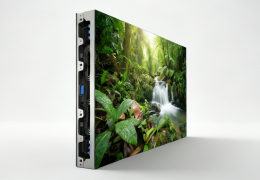
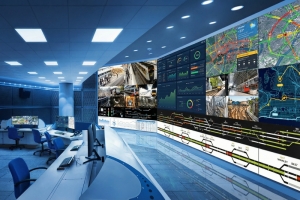
Fine-pitch and COB specialists. These factories focus on P0.9–P1.8 indoor products for control rooms, broadcast, and corporate lobbies. The segment includes large listed companies such as Leyard, Unilumin, and Absen, alongside mid-size COB-focused producers. What matters here: contrast ratio (look for 8,000:1+ on COB), surface durability, and 24/7 duty-cycle validation.
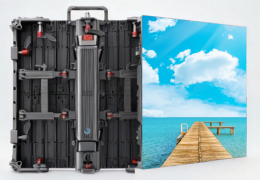
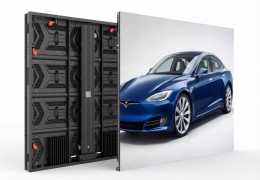
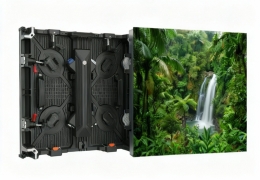
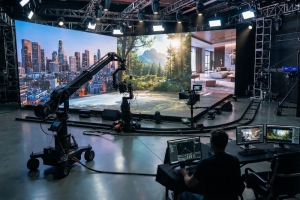
Rental and staging specialists. Producers of P2.6–P3.91 touring panels in 500×500 and 500×1000 mm die-cast cabinets, built around quick-lock systems and high refresh rates (3,840 Hz and up) for camera-facing stages. XVisual operates in this category — our XRF and XRD rental lines ship to European rental companies expanding existing inventories, where cabinet interchangeability with previous batches is the deciding factor. Other established names in rental include Gloshine and Lightlink.
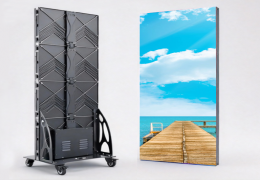
Outdoor and DOOH specialists. Factories concentrating on P4–P10 IP65 fixed installations: billboards, stadium perimeters, and facade media. Evaluate them on brightness (5,500–10,000 nits), energy consumption per m², front/rear service design, and wind-load engineering documentation — not on pixel pitch alone.
Transparent and creative specialists. A smaller segment covering glass-wall transparent displays, flexible mesh, and custom shapes. Lead times run longer (30–45 days) and engineering input matters more than unit price.
The practical takeaway: shortlist within your category first. A world-class outdoor billboard factory is the wrong partner for a rental fleet, and vice versa.
How to Verify and Contact a Supplier
Once you have a shortlist of three to five candidates, verify before you negotiate:
- Video factory audit. Ask for a live video walk of the SMT lines and aging test room on a video call — not a prerecorded corporate video. Real factories do this routinely; trading companies stall.
- Sample order. Order one cabinet or a 1–2 m² sample. Test it against your existing inventory for color match and control system handshake. Any China LED display supplier confident in its product will quote a sample at near-production pricing.
- Document request. Ask for the CE technical file, a recent third-party test report, and the export records for your region. Response time on this request alone tells you most of what you need to know.
- Reference check. Contact one named project reference from criterion 8. Ten minutes on a call with an existing customer beats ten pages of marketing.
Then match the next step to your buyer type. Distributors should open with MOQ tiers, channel protection terms, and payment structure. Integrators should lead with control system compatibility, lead time commitments in the proforma invoice, and documentation quality. Rental companies should start with cabinet standardization, spare module pricing, and batch-matching guarantees.
If you want a head start: XVisual provides a supplier qualification pack on request — CE documentation set, full datasheets, sample cabinet pricing, and our channel protection policy in writing. It is the same pack we would ask for if we were on your side of the table.
FAQ
Who is the largest LED display manufacturer in China? Several Chinese LED display companies are publicly listed with multi-billion-yuan revenues, including Leyard, Unilumin, and Absen. However, the largest manufacturer is rarely the best fit for a specific project — specialty focus, batch consistency, and after-sales support matter more than company size. Use the 8-criteria framework above to evaluate fit.
How do I find a reliable LED screen supplier in China? Verify three things before any deposit: request the full CE technical file naming the actual factory, order a sample cabinet to test color match and control compatibility, and confirm their channel protection policy in writing. A supplier who passes all three is very likely a genuine manufacturer.
What is the typical MOQ for LED displays from China? For standard rental or outdoor panels, genuine factories typically accept sample orders of one cabinet or 1–2 m², with production MOQs starting around 10–20 m². Custom or creative products carry higher minimums. Treat high MOQs on standard products as a warning sign of a middleman.
Are Chinese-made LED displays good quality? Quality spans a wide range and depends on the factory, not the country label. Established LED display manufacturers in China supply components and complete systems to major global stages, stadiums, and control rooms. The same industrial cluster also produces low-grade panels — which is exactly why evaluation criteria matter.
How long is the lead time and shipping from China? Standard products typically ship in 15–30 days after deposit; custom projects need 30–45 days. Sea freight adds roughly 25–40 days to Europe and 15–25 days to the US West Coast. Expect lead times to stretch 1–2 weeks during peak season (September–November and pre–Chinese New Year).
Can I get OEM/ODM LED displays from China? Yes. Most established LED producers in China offer OEM (your brand on their proven product) and ODM (custom mechanical or electrical design) programs. OEM usually starts at standard MOQs with a branding fee; ODM requires engineering discussion and higher volume commitments, typically 500+ m² annually.