

 English


Transparent LED displays deliver 40–95% light transparency while maintaining full content playback. This makes them the go-to solution for modern retail windows, glass facades, and architectural installations. With 6 distinct product types and prices ranging from $80 to over $1,000 per square meter, choosing the wrong type is the most expensive mistake a buyer can make. This comprehensive guide covers all key aspects of transparent LED displays, including a detailed selection matrix for indoor and outdoor use, real cost breakdowns, and the essential compliance certifications for global projects.
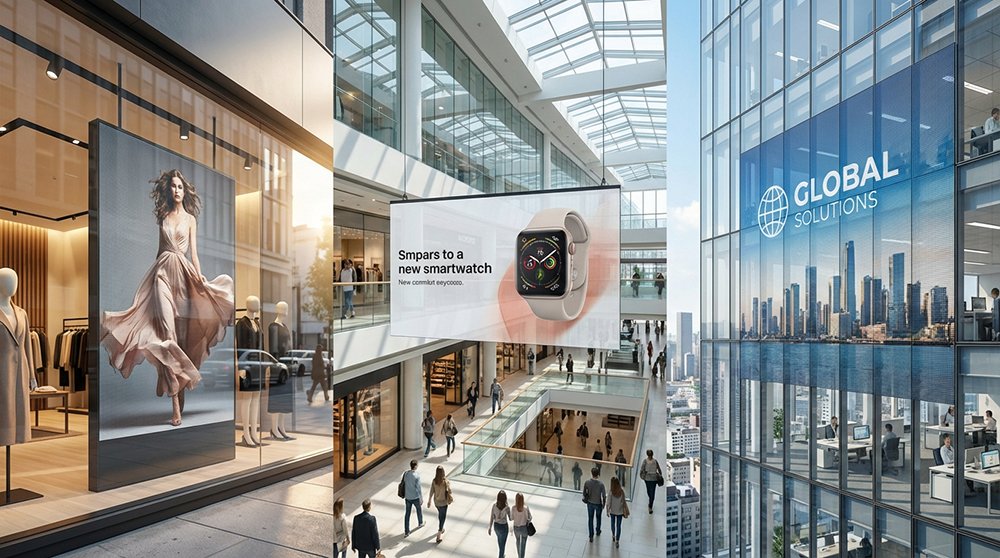
6 Types of Transparent LED Displays
Understanding the different types of transparent LED displays is your first step. Each type serves a unique purpose, balancing budget, scene requirements, and transparency.
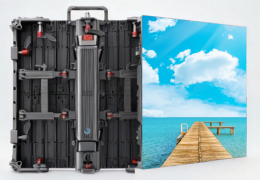
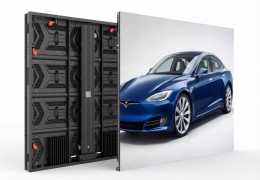
| Feature | Grid Screen | LED Film | Crystal Film | LED Glass |
|---|---|---|---|---|
| Pixel Pitch | P16–P100 | P3.5–P10 | P3.5–P10 | P5–P15 |
| Transparency | 55–90% | 90% | Up to 95% | >90% |
| Min. Viewing Distance | ≥5m | ≥1.5m | ≥1.5m | ≥2m |
| Brightness | 5,000–8,500 nits | 1,500–4,000 nits | 1,500–3,000 nits | 1,000–2,500 nits |
| Weight | 6 kg/㎡ | <1 kg/㎡ | Flexible film | Glass weight |
| Price ($/㎡) | 80-200 | 400-1,000 | ||
| Installation | ★★★ Easy | ★★★★ Very Easy | ★★★★ Easy | ★★ Complex |
| Best Use Case | Outdoor facade / bar | Retail window / showroom | Curved glass / atrium | Interior partition / lift |
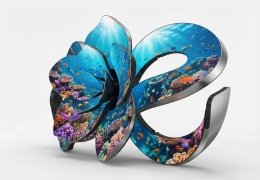
Holographic Mesh screens represent a fifth, specialty type. Designed for immersive 3D events and tourism installations, they typically cost $500+/㎡ with custom pixel pitches. They're fantastic for brand activations but fall outside standard commercial procurement.
Remember, each type fits a specific combination of needs. The following sections will help you match them perfectly to your project.
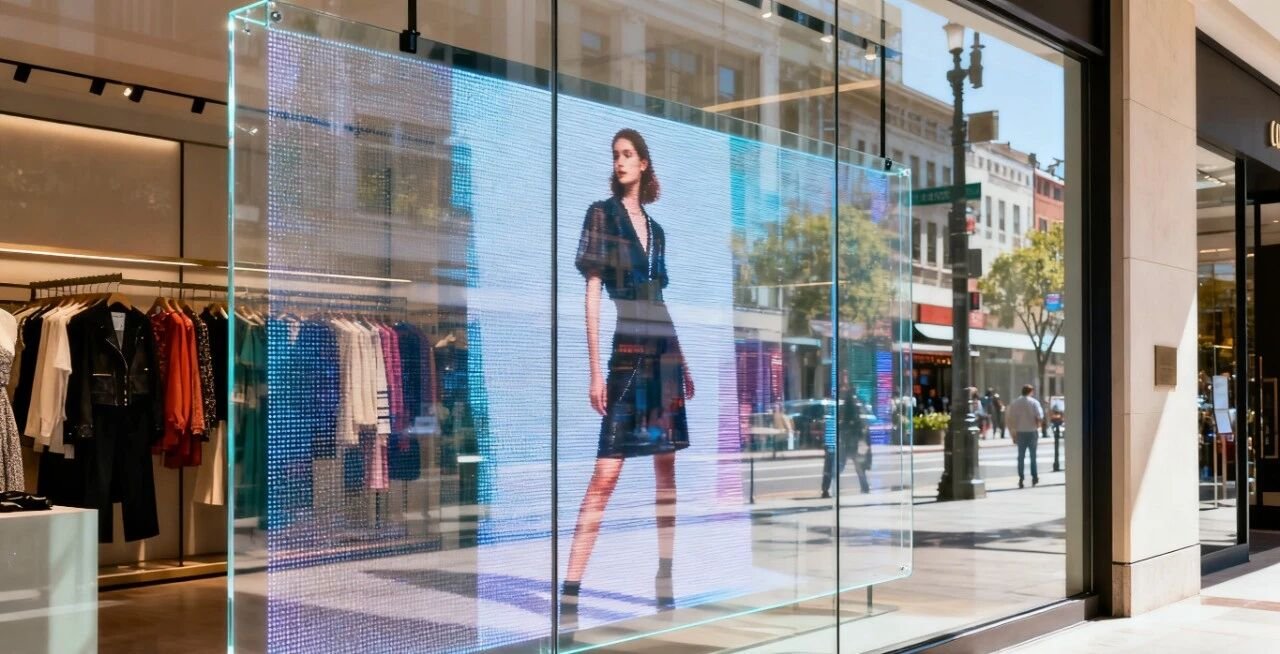
Indoor vs Outdoor: Key Differences
Here’s the core difference: brightness. Getting this wrong can waste your entire budget.
Outdoor installations face direct sunlight, demanding a minimum of 5,000 nits and up to 8,500 nits for south-facing facades. Indoor panels, rated for 1,500–3,000 nits, will become invisible in the sun. This isn’t a software fix—it’s a fundamental hardware failure.
Beyond brightness, outdoor setups have three non-negotiable requirements:
IP Rating: Indoor needs IP54. Outdoor must have IP65 minimum (fully dust-tight, water-jet resistant). Anything less risks rain damage in the first season. Thermal Tolerance: Outdoor panels must operate from -20°C to +60°C. Look for IEC 60068 compliance before buying. Power Consumption: Higher brightness means more power: 400–600W/㎡ outdoors vs. ~300W/㎡ indoors. Factor this into your electrical budget.
A simple rule: if the spot gets more than 2 hours of direct sun daily, specify outdoor-rated. “Semi-outdoor” areas still need full outdoor specs—shade doesn’t eliminate ambient light.
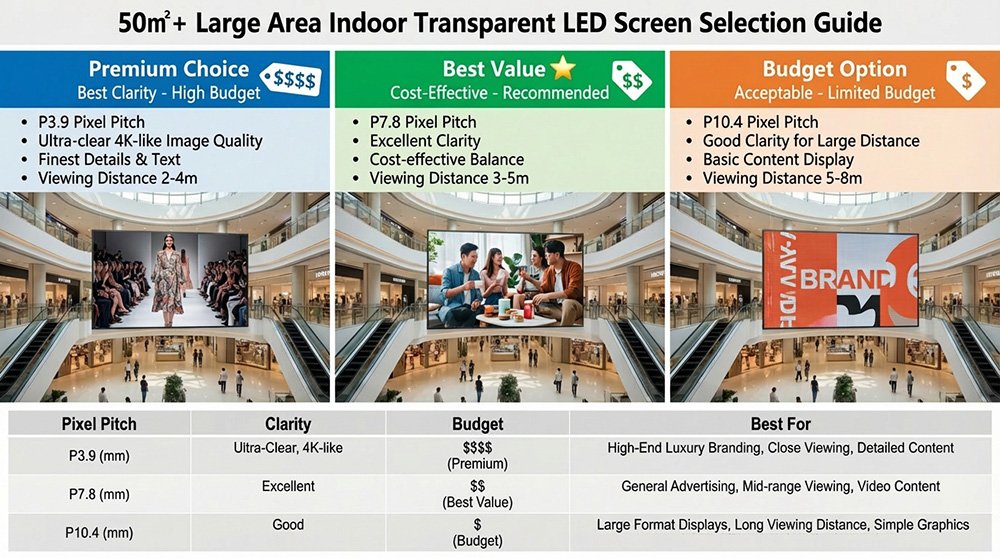
Pixel Pitch Selection by Scene
Pixel pitch controls both image sharpness and transparency, and they work against each other. A finer pitch (lower number) means better resolution but lower transparency.
Use this formula: Viewing Distance (m) × 1,000 = Max Recommended Pixel Pitch (μm).
A retail window viewed from 3m needs P3.0 or finer. A building facade viewed from 20m works well with P20–P25, which is cheaper and more transparent.
| Application Scene | Transparency | Pixel Pitch | Min. Brightness |
|---|---|---|---|
| Retail window (≤3m) | 70–80% | P3.5–P7.8 | 3,000 nits |
| Mall atrium (3–8m) | 80–85% | P7.8–P15 | 4,000 nits |
| Building facade (>10m) | 85–95% | P15–P25 | 6,000 nits |
| Indoor glass partition | 75–90% | P3.5–P10 | 1,500 nits |
| Outdoor bar / venue window | 55–80% | P16–P40 | 5,000 nits |
Key takeaway: A P25 screen looks sharp from 25m but unreadable from 5m. Match the pitch to your actual viewing distance.
Cost Per Square Meter — Full Breakdown
The panel price is only 60–70% of the total cost. Budgeting for just the screen leads to cost overruns of 35–50%.
Panel Cost by Type
| Type | Entry | Mid | Premium |
|---|---|---|---|
| Grid Screen | 80-120/㎡ | 120-200/㎡ | $200+/㎡ |
| LED Film | 250-400/㎡ | 400-600/㎡ | |
| Crystal Film | 300-500/㎡ | $800+/㎡ | |
| LED Glass | 400-600/㎡ | 600-900/㎡ | $1,000+/㎡ |
Costs Beyond the Panel
Suppliers often don't mention these upfront:
Installation Labor: Adds 15–25% of panel cost for standard walls. Complex curves or multi-story facades can hit 40%. Control System:500- 3,000 per installation, depending on sources and remote management needs. Compliance Certification: EU (CE + RoHS): 2000-5,000 per model. US (ETL/UL): Adds 3000- 8,000. Skipping this risks customs rejection and project failure.
Annual Operating Cost: This is huge. A 100㎡ screen at 600W/㎡ running 8 hours/day costs about $21,024/year in electricity ($0.12/kWh). Energy-efficient 300W/㎡ panels cut that to $10,512—saving over $10,000 yearly.Remember: The 5-year total cost of a cheap screen versus an efficient one is often closer than it looks. Always run the full numbers, including power and maintenance. How to Choose: 5 Buyer Criteria
Follow these five checks to avoid warranty calls in 6 months and ensure a display that lasts 5+ years.
① LED Chip Mounting Type
Front-emitting (SMD): Standard, mature technology with reliable supply chains for parts. Lower risk for first-time buyers. Side-emitting: Offers higher straight-on transparency, but quality varies more between manufacturers.
② Thermal Performance Test
Power a sample for 30 minutes and measure its surface temperature. Cooler running at the same brightness means better design and longer LED life. A 15°C+ difference between samples is a major red flag.
③ Solder Joint & Wiring Inspection
Solder joints: Should be fully formed—no cold joints or bridging. Signal cable: Must have ≥15 conductor cores. Peel back the sleeve to check. Connectors: For any outdoor claim, waterproof connectors are non-negotiable.
④ PCB Thickness (for Front-emitting Screens)
Thinner PCB substrate = higher transparency in grid screens. Get this specification in writing and compare suppliers.
⑤ Overseas Compliance Certification
Market Required Recommended European Union CE + RoHS IEC 60068 United States ETL or UL FCC (for wireless) International CE IEC 60068 Missing certification leads to customs delays, seizure, and failed inspections—a cost that always exceeds the 2000-5,000 certification fee.
 Best Applications by Scene
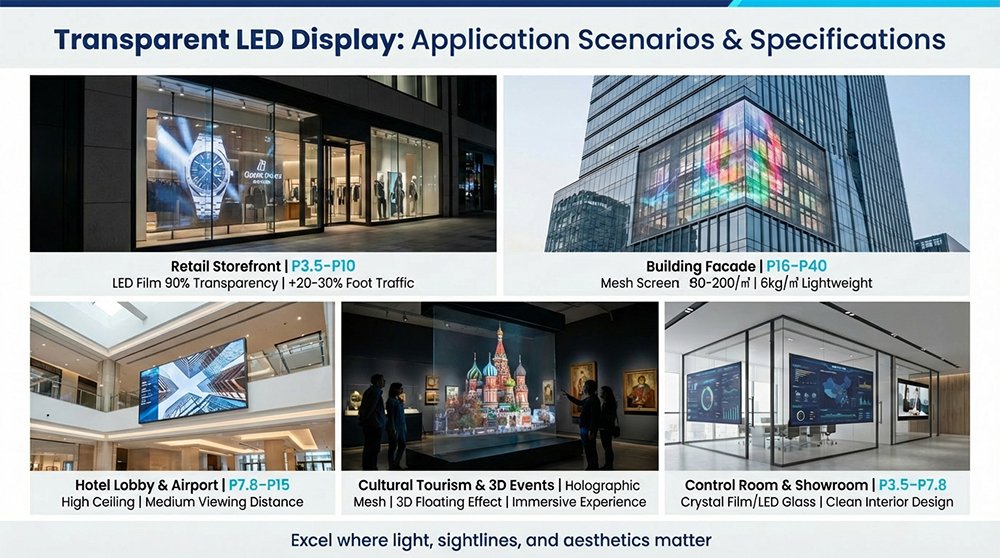
These screens shine where you need to preserve light, view, or aesthetics.
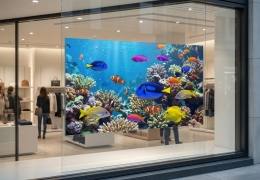
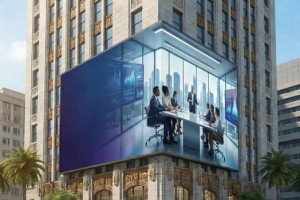
Retail Store Windows (P3.5–P10): LED film (90% transparency) installs directly on existing glass. Retailers see 20–30% more foot traffic with dynamic content. Building Facades / Glass Curtain Walls (P16–P40): Grid screens are the cost-effective, lightweight ($80–$200/㎡, 6 kg/㎡) choice for large outdoor areas. Hotel Lobbies & Airport Terminals (P7.8–P15): Mid-range pitch balances image quality and transparency for high-ceiling, mid-distance viewing. Control Rooms & Premium Showrooms (P3.5–P7.8): Crystal film and LED glass hide the hardware, maintaining sleek interior design. Cultural Tourism & 3D Events: Holographic mesh creates floating-image effects for immersive experiences.
Frequently Asked Questions
Q1: How do I choose the right pixel pitch?
Use the formula: Minimum Viewing Distance (m) × 1,000. For 5 meters, choose P5.0 or finer. For a 20-meter facade, P20–P25 is ideal.
Q2: How much does a transparent LED display cost per sqm?
Panel cost ranges from $80 to $1,000+ per ㎡ Add 15-25% for installation, $500–$3,000 for controls, and ~$10,500–$21,000 in annual power per 100㎡ for the full picture.
Q3: What transparency rate do I need for a retail window?
70–80% transparency works for most retail windows. It lets you see inside while displaying content. For maximum clarity, crystal film reaches up to 95%.
Q4: Which type suits an outdoor building facade?
Grid screens (P16–P40) are the standard. They're cost-effective ($80–$200/㎡), lightweight (6 kg/㎡), and designed for outdoor use without extra structural support.
Q5: Why do outdoor displays need higher brightness?
Direct sunlight hits at ~100,000 lux. An outdoor screen needs 5,000–8,500 nits to be visible. Indoor panels (1,500–3,000 nits) simply disappear in the sun.
Q6: Why is compliance certification non-negotiable for overseas projects?
EU customs requires CE and RoHS docs. The US requires ETL or UL. Missing certificates lead to border seizure, delays, and fines—costing far more than the certification fee itself.