
 English


A complete stadium LED screen system for small-to-mid venues isn't just one screen. It's a combination of 3–5 different display types, each with its own pixel pitch, brightness, and durability needs. Picking the wrong specs can lead to failed inspections, ugly rolling lines on broadcast TV, or worse—a full module replacement on-site.
For overseas contractors and distributors, the budget for these stadium LED display projects can range from
1.5 million. This guide cuts through the noise. We’re giving you a practical pixel pitch calculator, a clear cost breakdown, a compliance checklist, and broadcast specs you won't find anywhere else.
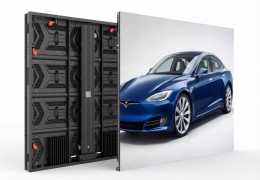
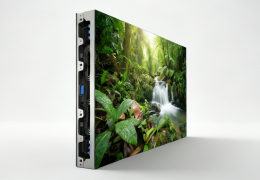
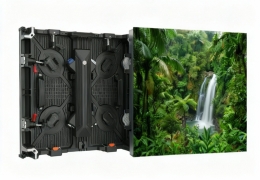
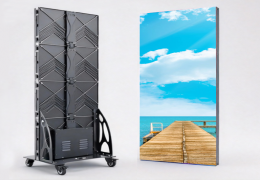
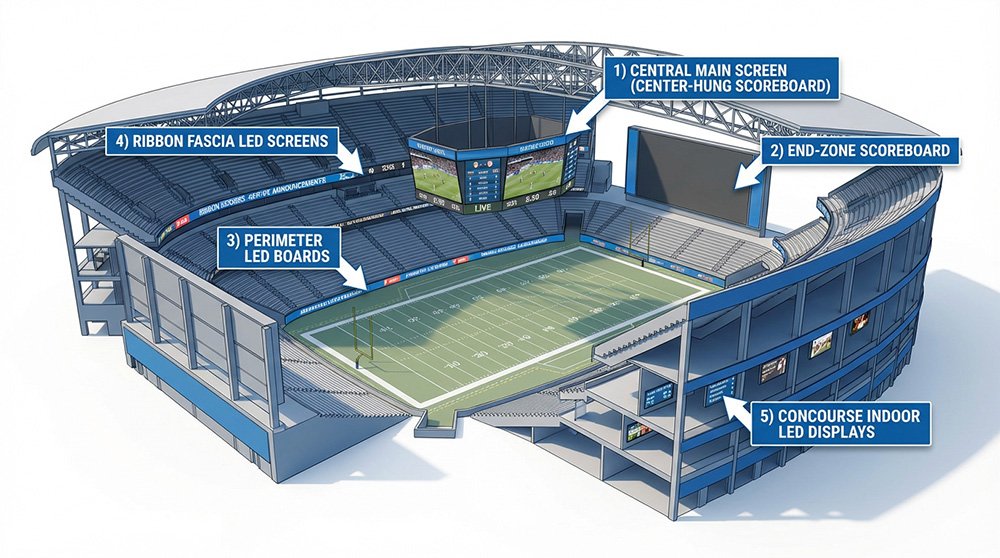
Types of Stadium LED Screens
Don't try to install everything at once. For most small-to-mid venues, the main screen and perimeter boards are the top priorities. You can phase in scoreboards and ribbon screens in later years.
Here’s a pro tip: perimeter boards show up in over 90% of broadcast camera shots. They give sponsors the biggest bang for their buck. Because of this, you should budget for them to meet broadcast specs before you finalize the main screen.
| Screen Type | Location | Function | Pixel Pitch | Key Priority |
|---|---|---|---|---|
| Central Main Screen | Centre-hung / end zone | Live replay, stats, broadcast | Outdoor P6–P10 / Indoor P5–P6 | Brightness + refresh rate |
| Scoreboard | Elevated end zone | Score, time, player data | P10–P16 | Readability at distance |
| Perimeter Board | Field perimeter | Sponsor ads, brand exposure | P6–P10 | IP68 + 3840Hz broadcast |
| Ribbon / Fascia | Front edge of stands | Stats, sponsor logos | P4–P6 | Viewing angle ≥120° |
| Concourse / Entry | Corridors, VIP, entries | Wayfinding, promotions | P2.5–P4 | Indoor brightness + IP54 |
Pixel Pitch, Brightness & IP Rating: The Holy Trinity
You must specify these three together. Missing one can sink the whole project.
Pixel Pitch × Viewing Distance
Here’s a simple formula to live by:
Minimum viewing distance (m) = Pixel pitch (mm) × 1 Optimal viewing distance (m) = Pixel pitch (mm) × 3
Quick rule: Take your farthest-seat distance and divide it by 3. That gives you the maximum pixel pitch you should use. For most small-to-mid outdoor main screens, P8 or P10 is the sweet spot. Remember, P6 costs 30–50% more per square meter—save it for closer-viewing screens like perimeter boards.
| Pixel Pitch | Min. Distance | Optimal Distance | Best Application |
|---|---|---|---|
| P4 | 4m | 12m | Indoor front rows, ribbon screens |
| P6 | 6m | 18m | Small stadium main screen, perimeter boards |
| P8 | 8m | 24m | Mid-size outdoor main screen, perimeter boards |
| P10 | 10m | 30m | Large outdoor main screen, scoreboards |
| P16 | 16m | 48m | 60,000+ seat venues, upper-tier main screen |
Outdoor Stadium LED Display Brightness & IP Rating by Region
Brightness requirements vary wildly. If you underspec, you’ll need a full module swap to fix it—it’s irreversible.
Indoor arena: ≥800 cd/m² Semi-outdoor (covered): ≥3,000 cd/m² Full outdoor / direct sunlight: ≥5,500–8,000 cd/m² Equatorial / high-altitude (Middle East, SE Asia): ≥10,000 cd/m²
The IP rating is your screen's armor. Don't cheap out here.
| IP Rating | Protection | Application | Climate / Region | Extra Requirement |
|---|---|---|---|---|
| IP54 | Dust + splash | Covered indoor arenas | Northern Europe, N. America indoor | — |
| IP65 | Dust-tight + water jet | Semi-outdoor stadiums | Standard outdoor venues worldwide | — |
| IP68 | Full immersion-proof | Exposed perimeter boards | SE Asia, S. America (heavy rain) | Silicone front-face potting |
| IP68 + IK08 | Above + impact | Player-contact perimeter | All contact sports, all climates | Anti-corrosion PCB treatment |
Climate add-ons you need to know:
High-heat/arid zones (Middle East): Axial fan cooling, 85°C-rated components. High-wind zones (Gulf Coast): Steel structure for Wind Force 10+, cabinet weight <40kg. Seismic zones (Japan): Flexible cabinet mounting, seismic Grade ≥6.
Stadium LED Screen Cost by Venue Size
Budget based on venue capacity. That number drives screen count, total area, and structural complexity.
| Venue Scale | Main Screen | Perimeter Boards | Scoreboard | Total Budget |
|---|---|---|---|---|
| Small < 5,000 seats (school / community) | 30K-180K | 20K-80K | 10K-50K | 60K-300K |
| Mid 5,000–30,000 seats (college / regional pro) | 150K-1M | 80K-300K | 50K-200K | |
| Large 30,000+ seats (professional) | 1M-10M+ | 300K-1.5M | 2K-15M+ |
2026 Perimeter Board Unit Cost Guide:
P6 = 800- 1,200/m² P8 =630- 790/m² P10 =500-800/m²
A 100m long by 1m high install (100m²) will cost 63K-
| Budget Variable | Cost Impact |
|---|---|
| Pixel pitch (P6 vs P10, same spec) | +30–50% per m² |
| Refresh rate (1920Hz → 3840Hz) | +15–25% module cost |
| IP rating (IP65 → IP68 + IK08) | +20–30% per module |
| Steel structure & mounting | 20–35% of total project |
| Control system + content CMS | 25K-550K |
If you're on a tight budget: Install the perimeter boards and main screen first. These two capture over 80% of broadcast exposure and ad revenue. You can add scoreboards and ribbon screens in Year 2 or 3.
Compliance Certifications for Overseas Projects
For overseas contractors, missed certification is the #1 cause of project delays. The good news? Small-to-mid venues don't need fancy FIFA or NBA certs—just the regional basics.
| Market | Required Certifications | Standard |
|---|---|---|
| European Union | CE (LVD + EMC) | EN 60598, EN 55015 |
| United States | ETL or UL + FCC | UL 8750, FCC Part 15 |
| Canada | ETL + CSA-US | CSA C22.2 |
| All markets | RoHS | IEC 62321 |
| All outdoor | IP65 / IP68 at module level | IEC 60529 |
Before you sign the purchase order, request these from your supplier:
✅ CE Declaration of Conformity (EU) or ETL/UL certificate (N. America) — not a self-declared document.
✅ RoHS test report (IEC 62321).
✅ IP rating certificate (IEC 60529) at the module level — not just the cabinet.
✅ Temperature cycle test report (–25°C to +60°C).
For distributors: Having CE + ETL + RoHS as a baseline covers 90%+ of market entry hurdles and stops most customs inspections from failing.
Stadium LED Screens for Broadcast: Camera Compatibility
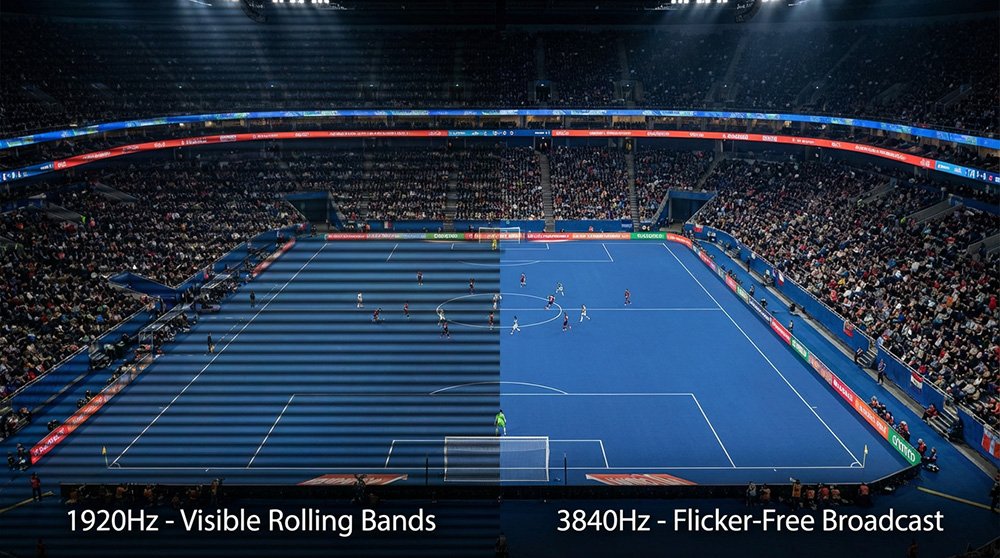
Any screen a camera points at is a liability if the refresh rate is too low. Rolling scan lines cannot be fixed in editing.
Broadcast cameras use fast shutter speeds (1/100s to 1/500s). A 1920Hz screen at 1/250s gives the camera about 7.7 messy, incomplete refresh cycles, causing dark bands. A 3840Hz screen delivers about 15.4 clean cycles—banding disappears.
| Screen Type | Minimum Hz | Recommended Hz | Reason |
|---|---|---|---|
| Central main screen / Jumbotron | 1920Hz | 3840Hz | End-zone broadcast camera angles |
| Perimeter board | 3840Hz | 7680Hz | In 90%+ of field-level shots |
| Scoreboard | 1200Hz | 1920Hz | Rarely in direct broadcast angle |
| Ribbon / Fascia screen | 1920Hz | 3840Hz | Sideline broadcast angles |
Your broadcast-ready checklist:
✅ Refresh rate: ≥3840Hz for perimeter boards; ≥1920Hz for all others.
✅ Driver IC: MBI5153 / ICN2053 / ICND2055 models (needed for true 3840Hz).
✅ Scan mode: Verify IC and scan mode together—a 1/16 scan can't really do 3840Hz.
✅ Frame rate input: Control system must handle 50/60fps without dropping frames.
✅ Color uniformity: ΔE <3 across the full screen (ask for the factory report).
✅ Signal redundancy: Dual sending-card setup for failover during live broadcasts.
FAQ
Q1: How do I calculate pixel pitch for my stadium?
Take the distance to your farthest seat (in meters) and divide it by 3. That's your maximum pixel pitch in mm. Example: A 60m back row means P20 is your max. Using P10 at 60m gives you sharp video and saves 30–50% compared to P6.
Q2: What refresh rate do broadcast cameras require?
You need a minimum of 3840Hz for any screen in a broadcast shot. For perimeter boards—which are in most field-level shots—spec 3840Hz as a minimum, and 7680Hz for major televised events.
Q3: What certifications does an overseas stadium LED project need?
EU: CE (LVD + EMC). USA/Canada: ETL or UL + FCC. All markets: RoHS. All outdoor installs: IP65/IP68 at the module level. Small-to-mid venues do not need FIFA or NBA certifications.
Q4: What’s the difference between a Jumbotron and a perimeter LED board?
A Jumbotron is a large video screen (30–200m²) at the centre or end zone for replays and entertainment. A perimeter board is a continuous strip (60–200m) along the field edge for sponsor ads. It has stricter requirements for weatherproofing (IP68), refresh rate, and impact resistance.
Q5: Can stadium perimeter LED boards handle rain and snow?
Yes—if you spec them right. Fully exposed boards need IP68 minimum. Add an IK08 anti-impact rating for any zone players might contact. In tropical, high-rainfall regions, insist on IP68 with full-face silicone potting. It's non-negotiable.