


 English


Choosing a church LED wall shouldn't feel like guesswork. We've seen too many churches struggle with mismatched specs, delayed support, or compliance headaches—all because they didn't have the right guidance upfront. Clear, stable displays aren't just technical requirements; they're essential for worship experience and community connection.
We're a hands-on LED manufacturing facility with R&D headquarters in Shenzhen Shiyan and production base in Suzhou. Over the past years, we've specialized in church installations across North America, Europe, and Australia. Everything below comes from real project experience—practical selection criteria, installation insights, and support realities you can actually use.
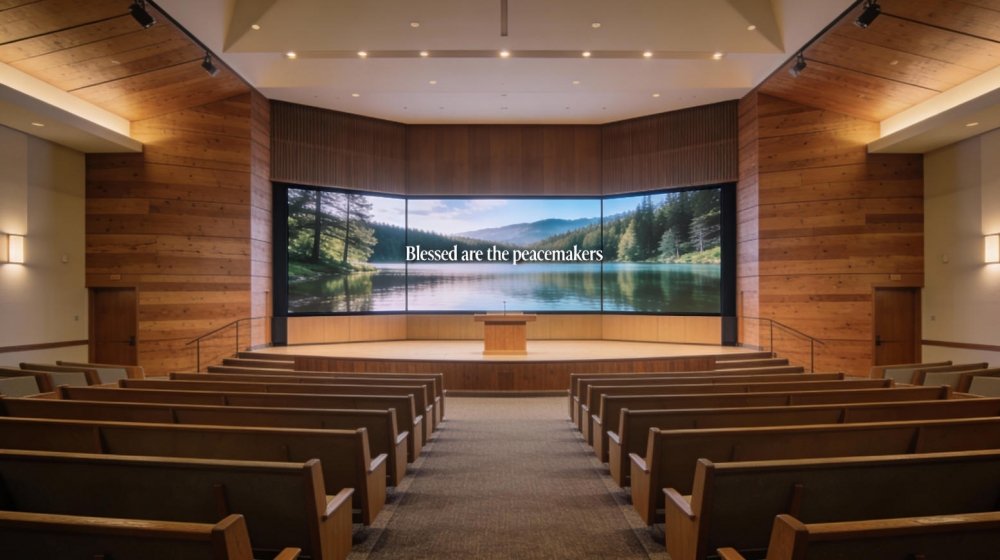
Why Churches Switch to LED Walls (Real-World Perspective)
Among the 200+ churches we've worked with overseas, most have already replaced projectors. The shift isn't about chasing specs—it's about solving actual pain points:
Worship Experience First
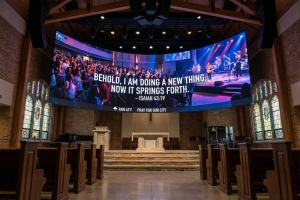
Scripture and lyrics display clearly in English, Spanish, or any language your congregation needs. Elderly members and children can read comfortably from any seat. No eye strain during extended services.
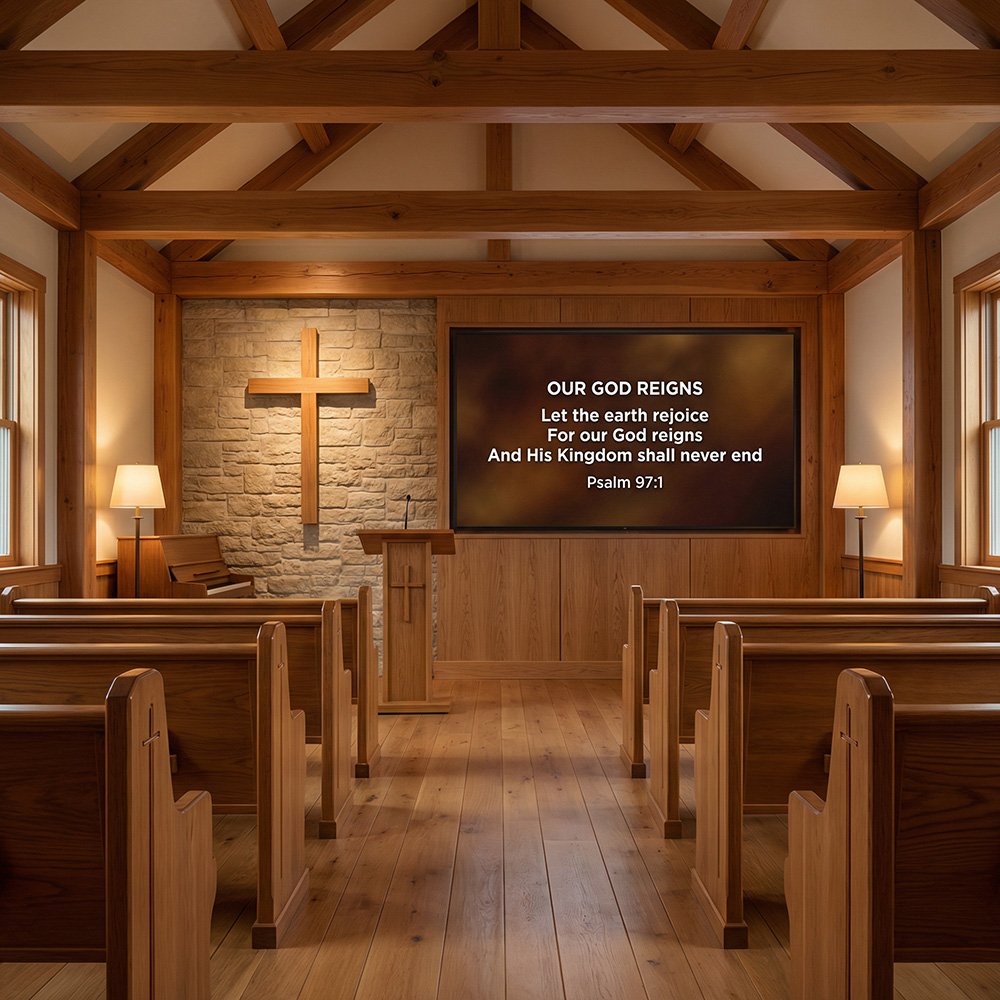
Livestream-Ready
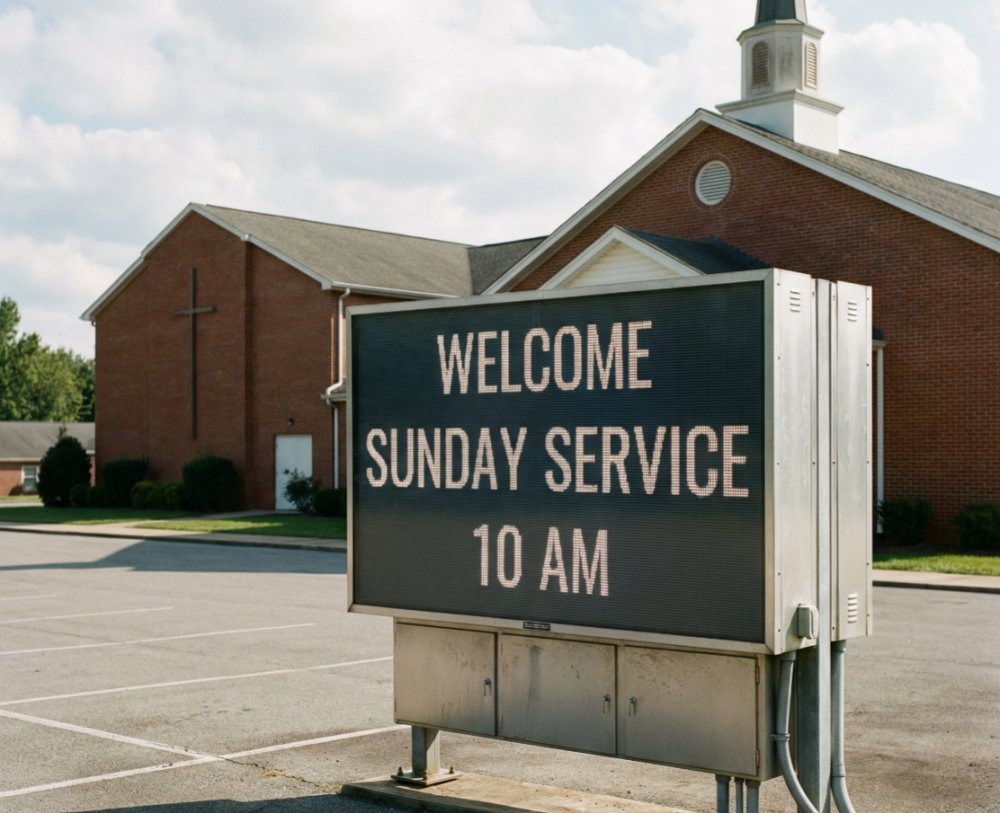
Seamless compatibility with YouTube Live, Facebook, and Zoom. Remote congregation members join worship in real-time. Outdoor displays keep your community informed about events and messages.
Lower Long-Term Costs
8-15 year lifespan means no lamp replacements, no frequent maintenance calls. Especially valuable overseas where support response times are longer. Set it and mostly forget it.
Accessibility Built-In
Large fonts, high contrast, synchronized captions. Serves members with visual or hearing challenges. Meets accessibility standards most overseas churches are expected to follow.
Clarify 3 Core Needs Before Shopping (Avoid Wasting Money)
Most churches that regret their LED purchase made decisions without clear requirements. Get these three things straight first, and you're halfway to the right choice:
1. Installation Location & Primary Use
Different areas demand different solutions:
Main Sanctuary (Core Focus)
Scripture display, sermon projection, livestream sync. Priorities: clarity, zero flicker, multi-input support.
Chapel/Prayer Rooms
Small gatherings, Bible studies. Priorities: compact size, cost-effective, simple operation.
Outdoor Entrance/Plaza
Announcements, welcome messages, event notices. Priorities: high brightness (readable in sunlight), IP65 weather protection.
Hallways/Reception
Welcome messages, event schedules. Priorities: slim profile, low power consumption, auto-loop playback.
2. Church Size & Viewing Distance
Viewing distance determines pixel pitch (clarity) and screen size. Here's what works based on hundreds of installations—no complex calculations needed:
Small Churches (50-200 seats) 3-8 meter viewing distance → P2.6-P3.9 pixel pitch balances clarity and budget
Mid-Size Churches (200-500 seats) 8-15 meter viewing distance → P2.9-P3.9 pixel pitch keeps everyone happy, front to back
Large Churches (500+ seats) 15-30 meter viewing distance → P3.9-P4.8 pixel pitch ensures back rows see clearly
3. Total Budget (Hardware + Install + Warranty)
Factory-direct pricing from our Shenzhen/Suzhou facilities, no middleman markup:
| Tier | Church Type | Price Range (USD) | What's Included |
|---|---|---|---|
| Basic | Small Churches | $18,000-$28,000 | P2.6 panels, installation, standard warranty |
| Standard | Mid-Size Churches | $45,000-$65,000 | P2.9 panels, livestream optimization, 2-year warranty, regional support |
| Premium | Large Churches/Outdoor | $80,000-$180,000 | P3.9-P4.8 panels, multi-screen sync, 4K capability, on-site support |
Specification Guide (What Actually Matters)
Skip the technical jargon. These three specs and four functions are what church environments actually require, based on our production and installation experience:
3 Critical Specifications
| Spec | What It Does | Church Recommendation | Common Mistakes to Avoid |
|---|---|---|---|
| Pixel Pitch | Affects clarity; smaller = sharper but pricier | Small: P2.6-P3.9 Mid: P2.9-P3.9 Large: P3.9-P4.8 | Don't buy P1.5-P1.9 for 20ft+ viewing—you'll spend 60% more for zero visible difference |
| Brightness (Nits) | Overcomes ambient light | Dark sanctuary: 1,500-2,500 Standard: 2,500-4,000 Glass architecture: 4,000-6,000 | Match your lighting. Too bright wastes electricity; too dim forces expensive blackout installations |
| Refresh Rate (Hz) | Prevents flicker, critical for livestreaming | Basic worship: ≥1,920Hz Livestream: ≥3,840Hz Broadcast-grade: ≥5,000Hz | Watch for "effective refresh rate" claims—demand true optical refresh rate in writing |
Must-Have Features (From Our Standard Church Configurations)
Essential (Non-Negotiable)
Multi-language interface: English/Spanish/etc. quick-switch for diverse congregations Livestream compatibility: YouTube, Facebook, Zoom plug-and-play Simple operation: Wireless phone/tablet control, pre-loaded scripture templates Wide voltage: 110V/220V compatibility (US, Europe, Australia) Silent cooling: Fanless design respects worship atmosphere
Valuable Add-Ons (Based on Your Needs)
Multi-window display: Show scripture + lyrics + sermon camera simultaneously Emergency alerts: Push urgent notices in multiple languages instantly Genlock sync: Professional multi-camera broadcasts without screen tearing Auto scheduling: Timer-based power control saves electricity costs
Installation & Compliance (Avoid Delays and Fines)
Overseas church installations require more attention to compliance and safety than domestic projects. Our international installation teams have helped churches navigate these requirements repeatedly:
Installation Essentials
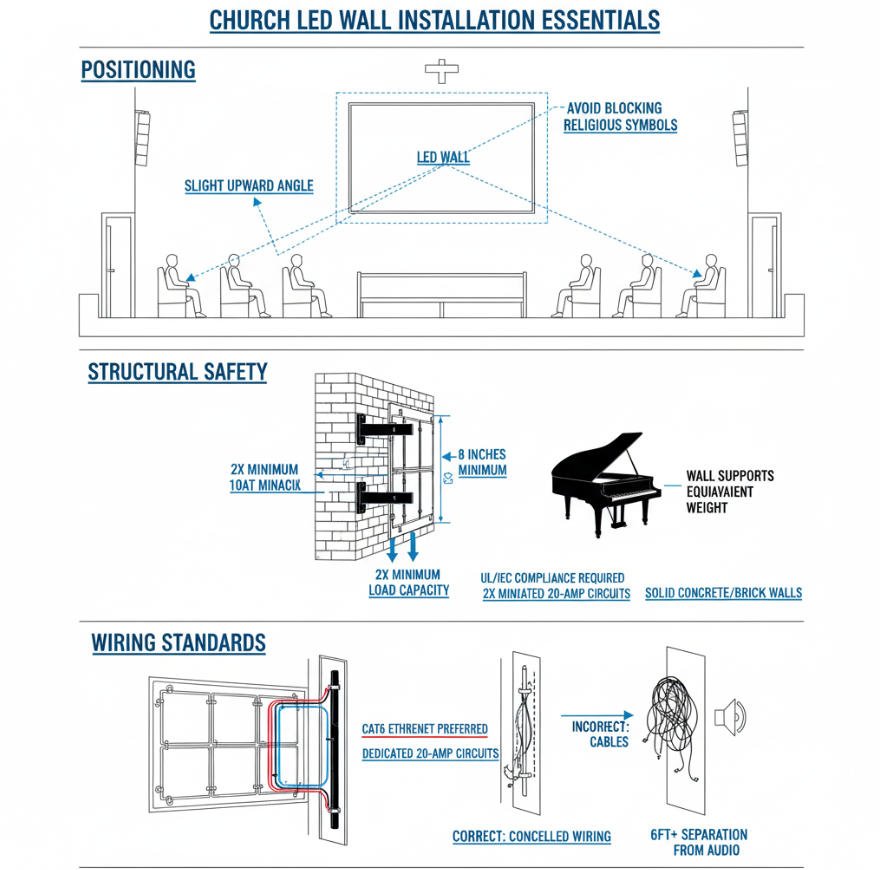
Positioning
Avoid blocking crosses, sacred imagery, or other religious focal points. Mount at slight upward angle from average eye level to reduce neck strain.
Structural Safety
Wall-mount or ceiling-hung installations must meet local building codes (UL in US, IEC in Europe). Load capacity must be 2x minimum the display weight. No exceptions.
Wiring Standards
Concealed cable routing maintains church aesthetics. Dedicated electrical circuits prevent interference with sound systems. CAT6 ethernet strongly preferred over WiFi (eliminates latency).
Compliance Checklist
Equipment Certification
Must carry regional approvals (UL/CE/SAA). Our products ship with these pre-certified—no customs delays.
Outdoor Permits
Europe and Australia often require municipal approval for exterior displays. We can provide past approval documentation to streamline your process.
Installation Teams
Use local contractors with church LED experience. We maintain partner networks in major overseas markets and can facilitate introductions.
Maintenance & Long-Term Support (Factory-Backed Peace of Mind)
Overseas churches face longer support response times. Proper maintenance and choosing suppliers with real infrastructure make all the difference. Our Shenzhen and Suzhou facilities support a complete overseas service network:
Routine Maintenance (Staff Can Handle)
Weekly Cleaning
Soft dry cloth only—never water, alcohol, or chemicals. Overseas LED module replacement is expensive; gentle care extends lifespan significantly.
Monthly Inspection
Check power connections and cable seating. Watch for loose connections or heat buildup.
Proper Power Sequencing
Turn on display first, then control equipment. Reverse when shutting down. Prevents surge damage.
Our Support Commitment
Warranty Coverage
2-3 years including local on-site service through regional partner networks. Fast response when you need it.
Parts Inventory
Common components (power supplies, LED modules, control cards) stocked at Shenzhen/Suzhou facilities and overseas partner warehouses. Minimal wait times.
Remote Diagnostics
Most issues resolved remotely without waiting for technician visits.
3 Factory-Direct Church Solutions
| Solution Tier | Church Type | Configuration | Investment (USD) | Key Benefits |
|---|---|---|---|---|
| Essential | Small community churches (50-200 seats) | P2.6, 10×6ft single screen, 1500 nits, 1920×1080, front-service | $18,000-$28,000 | Factory-direct value, daily worship needs covered, simple maintenance, Shenzhen/Suzhou direct shipping |
| Professional | Mid-size parish churches (200-500 seats) | P2.9, 16×9ft center screen, 2000 nits, 3840Hz refresh, livestream-optimized | $45,000-$65,000 | Balances clarity and broadcast quality, proven stability, regional support network, on-site service available |
| Premium | Large cathedral churches (500+ seats) | P3.9-P4.8, 20×11ft + optional side screens, 2500-3000 nits, 4K capable, multi-screen sync | $80,000-$180,000 | Handles complex worship scenarios, multi-campus sync, broadcast-grade quality, customized engineering |
Common Mistakes to Avoid (Lessons from Overseas Projects)
Based on working with churches worldwide, these six mistakes cause the most regret:
Overshooting Pixel Pitch: Buying P1.5 for a small church when viewing distance is 20ft. Looks identical to P2.6 but costs 60% more, with higher maintenance costs too. Brightness Mismatch: Installing 2,000-nit panels in a glass-walled sanctuary. Screen becomes invisible during daytime services, forcing expensive blackout shade installations ($16,000+). Ignoring Livestream Refresh Rate: Choosing <1920Hz panels creates visible scan lines on camera. Fixing this later is expensive and disruptive. Voltage/Certification Gaps: Ordering 220V equipment for US installation, or lacking UL/CE certification. Equipment stuck at customs or unusable on arrival. No Local Support Network: Supplier has no overseas service presence. When issues arise, replacement parts take 1-2 months to arrive, disrupting services. Blocking Religious Elements: Poor initial planning blocks crosses or sacred artwork. Reinstallation wastes time and money, disrupts worship schedule.
Summary & Practical Recommendations
Choosing a church LED wall isn't about comparing specs or chasing the lowest price. It's about finding the right fit, reliable performance, and solid support. As a manufacturing facility with Shenzhen Shiyan R&D and Suzhou production capabilities, we believe valuable solutions solve real problems for church environments.
For Church Procurement Leaders:
Start with location, church size, and budget—lock down actual requirements before comparing options Match pixel pitch, brightness, and refresh rate to viewing distance—use field-tested guidelines, not marketing claims Choose suppliers with regional certifications and local support infrastructure—avoid trade middlemen who add markup without adding value Plan installation positioning early, coordinate with local contractors, secure compliance approvals before equipment arrives
If you can provide your church's specific details—seating capacity, viewing distance, core requirements (especially livestream needs)—we can develop a custom solution based on our Shenzhen and Suzhou production capabilities. We'll provide factory-direct pricing and overseas project case studies for reference.