


 English


When purchasing LED displays, price is an unavoidable core concern. However, focusing solely on the initial quote can easily lead to overpaying or making the wrong purchase. Truly smart procurement looks at the total cost of ownership and calculates the return on investment. This article helps you understand the cost structure of LED displays, teaches you how to accurately plan your budget, and ensures every penny is spent wisely.
I. First Understand: What Does the Cost of an LED Display Actually Include?
The final cost of an LED display extends far beyond the screen itself. It represents a comprehensive expense encompassing three primary components.
1. Core Hardware Costs (Highest proportion, determines foundational quality)
This constitutes the most tangible expenditure, primarily determined by screen specifications. Smaller dot pitch yields finer image quality but commands higher prices—an indoor P1.0 screen may cost 2-3 times that of a P2.5 model. Outdoor screens require higher brightness and protection ratings, making them 30%-50% more expensive than indoor screens of the same specifications.
Additionally, brand and technology influence pricing. Leading brands offer superior driver ICs and panel materials, commanding 15%-20% higher prices than niche brands. COB packaging costs more than traditional SMD packaging but reduces long-term maintenance expenses.
2. Hidden Additional Costs (Most easily overlooked, yet cumulatively significant)
Installation Costs: Wall-mounted, suspended, or floor-standing installations vary greatly in expense. Complex scenarios (e.g., high-altitude, irregularly shaped screens) may incur installation fees accounting for 10%-20% of hardware costs.
Accessory Costs: Control systems, power supplies, cables, etc.—avoid cheap alternatives. Premium control systems (e.g., Nova, Calite) are pricier but offer greater stability and fewer future failures.
Commissioning Costs: Professional color calibration and signal adaptation ensure optimal display performance. These fees are typically charged per session or per day.
3. Long-Term Operating Costs (Determine Future Burden—Must Be Calculated Upfront)
Electricity costs: Larger screens and higher brightness consume more power. Outdoor advertising screens operating 24/7 can incur annual electricity bills reaching thousands of dollars. Energy-efficient models, though pricier upfront, yield significant long-term savings.
Maintenance costs: Indoor screens require minimal upkeep—primarily cleaning and occasional part replacements. Outdoor screens face complex environments, necessitating regular protective inspections and replacement of vulnerable components. Annual maintenance typically amounts to 3%-5% of the hardware cost.
Replacement Costs: High-quality screens last up to 100,000 hours, while low-quality ones may require replacement within 3-5 years, ultimately increasing total expenses.
II. The Critical Step: How to Calculate LED Display ROI?
For commercial users, LED screens are not “consumer goods” but “investment assets.” Return on Investment (ROI) determines their worthiness.
1. ROI Calculation Logic for Different Scenarios
Outdoor Advertising Screens: Focus on advertising revenue. Assuming an initial investment of $200,000 for an outdoor screen, with average annual advertising income of $80,000 and annual maintenance + electricity costs of $20,000, the net annual profit is $60,000. This means a payback period of approximately 3-4 years.
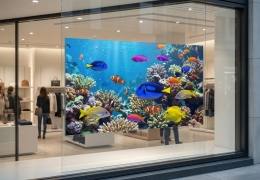
Retail Store Screens: Emphasize conversion rate improvement. By displaying products and promoting events on the screen, if customer conversion rates increase by 5%, combined with the store's average annual revenue, the additional profit can be calculated.
Conference Room Screens: Calculate efficiency gains. High-quality screens reduce meeting interruptions and screen-sharing failures, indirectly saving employee time—a form of intangible return.
2. Two Core Formulas for Quick ROI Estimation
Total Cost of Ownership (TCO) = Hardware Cost + Installation Accessories Cost + (Annual Electricity + Annual Maintenance) × Service Life
Return on Investment (ROI) = (Annual Average Revenue - Annual Average Total Cost) ÷ Initial Total Investment × 100%
Tip: Opt for models with longer lifespans and energy efficiency to significantly boost ROI.
III. Practical Budget Planning: How to Allocate Funds for Different Needs?
There is no “standard answer” for budgeting; the key lies in prioritizing needs. Here are specific recommendations for three common budget scenarios:
1. Limited Budget (Value-for-Money Approach)
Core Principle: Meet core requirements while eliminating non-essential features.
Selection Recommendations: For indoor use, choose SMD-packaged screens with a pixel pitch of P2.0-P2.5, sufficient for standard meetings and displays. For outdoor use, select models with IP65 basic protection and 5000 nits brightness.
Funding allocation: Hardware 70%, installation accessories 20%, reserve 10% for future maintenance.
2. Moderate Budget (Balancing Quality and Cost)
Core principle: Prioritize visual impact and durability while incorporating energy-saving features.
Selection recommendations: For indoor use, choose P1.2-P1.5 screens supporting high refresh rates and wide color gamut; for outdoor use, select models with UV protection and energy-efficient drivers.
Budget Allocation: Hardware 65%, Installation Accessories 20%, Energy-saving Upgrades 5%, Reserve 10% for Maintenance and Contingencies.
3. Generous Budget (Pursuing Premium Experience and Long-term Stability)
Core Principle: Prioritize quality, technology, and service to minimize future risks.
Selection Recommendations: For indoor use, choose COB-packaged seamless screens; for outdoor use, select high-brightness, high-protection-rated custom models paired with professional control systems and remote operation/maintenance capabilities.
Funding Allocation: Hardware 60%, Installation/Commissioning 20%, After-Sales Support (extended warranty, on-site service) 10%, Reserve 10% for upgrades and maintenance.
IV. Exclusive for U.S. Buyers: Additional Budget Planning Considerations
1. Don't overlook compliance costs: Ensure products carry UL and FCC certifications. Some regions may require installation permit fees—allocate funds in advance.
2. Calculate after-sales costs thoroughly: Prioritize sellers with local U.S. support teams. Though this may add 5%-10% to costs, it avoids lengthy overseas repairs and high expenses.
3. Currency exchange and tariff impacts: Account for exchange rate fluctuations and import duties when budgeting. Allow 5%-8% contingency for currency volatility.
V. Final Budget Planning Checklist
• Core requirements clearly defined, distinguishing essential vs. non-essential features
• Total cost of ownership calculated, not just initial quote
• Return on investment estimated based on usage scenarios, confirming value proposition
• 5%-10% budget buffer allocated
• Confirmed compliance certification and after-sales support costs
• Avoided “low-price traps” by prioritizing reputable brands with stable track records
The essence of LED display procurement is “spending wisely.” By understanding cost structures, calculating ROI, and aligning budgets with specific needs, you avoid wasteful spending while securing the most suitable product. Remember: Effective budget planning delivers greater long-term value than mere price haggling.